

Your Facebook or Instagram campaign generated leads. The dashboard looks active. But the phone stays quiet, prospects disappear, and too few estimates become jobs.
That does not automatically mean Meta ads failed. A lead is only a person who raised a hand. The business still has to turn that interest into a conversation, an estimate, and a decision.
If Facebook leads are not turning into jobs, inspect the whole path before blaming the platform.
1. The Offer Is Too General
“Contact us for a free estimate” gives people little reason to act now. It also attracts anyone who is mildly curious.
A stronger offer names the service, the customer, and the next step. A painter might offer an exterior-painting estimate for homeowners in a defined area. An HVAC company might promote seasonal tune-ups with clear eligibility. Specific offers help prospects decide whether they are a fit before submitting.
The ad should also explain what happens next. Will someone call? Can the customer choose a time? Is the estimate on-site or by phone? Clarity removes uncertainty.
2. The Form Makes Accidental Interest Too Easy
Meta Instant Forms are mobile-first and can prefill contact information. That convenience can increase submissions, but a very short form may also collect people who are not ready to talk.
Add only the questions that help you decide fit: service needed, ZIP code, preferred timing, and whether the person owns the property. Do not build an interrogation. Create enough useful friction to separate a real request from a casual tap.
Meta also supports lead-quality optimization through CRM data. When a business sends qualified-lead outcomes back through Conversions API for CRM, Meta can learn which leads matter, not only who completed a form.
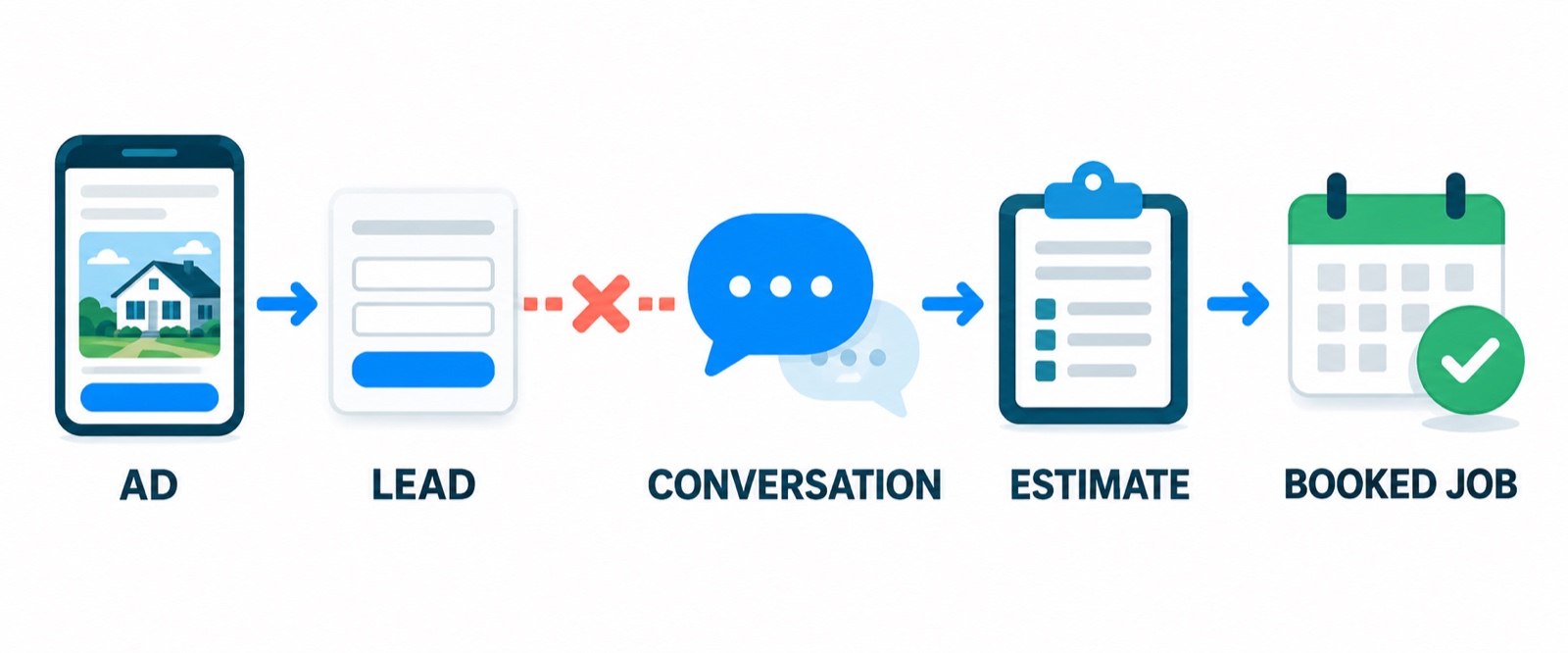
3. Follow-Up Starts Too Late
Meta leads often have lower immediate intent than someone searching Google for an emergency service. They may have responded while scrolling, then returned to work, family, or another task.
Contact the lead as soon as your team reasonably can while the ad is still familiar. Start with context, not pressure:
“Hi Maria, this is Alex from ABC Painting. You requested information about an exterior-painting estimate on Facebook. Is now a good time for two quick questions?”
That message reminds the person what they asked for and makes the reply easy.
4. One Call Is Not a Follow-Up System
Homeowners do not always answer an unfamiliar number. One missed call followed by silence wastes leads the business already paid to acquire.
Use a short, respectful sequence across several days: call, leave a brief voicemail, send a text with context, try again at a different time, and close with a helpful final message. Stop when someone asks you to stop.
The goal is not to chase people. It is to make it easy for a busy prospect to continue the conversation.
5. You Are Measuring Leads Instead of Jobs
Cost per lead is useful, but it cannot tell you whether the campaign produces revenue. Track each stage:
- New leads
- Leads contacted
- Qualified opportunities
- Estimates scheduled
- Jobs booked
- Revenue from booked jobs
A campaign with fewer leads may be better if more of them become profitable jobs. Once you know where people drop out, you know whether to fix the ad, form, response process, estimate, or sales conversation.
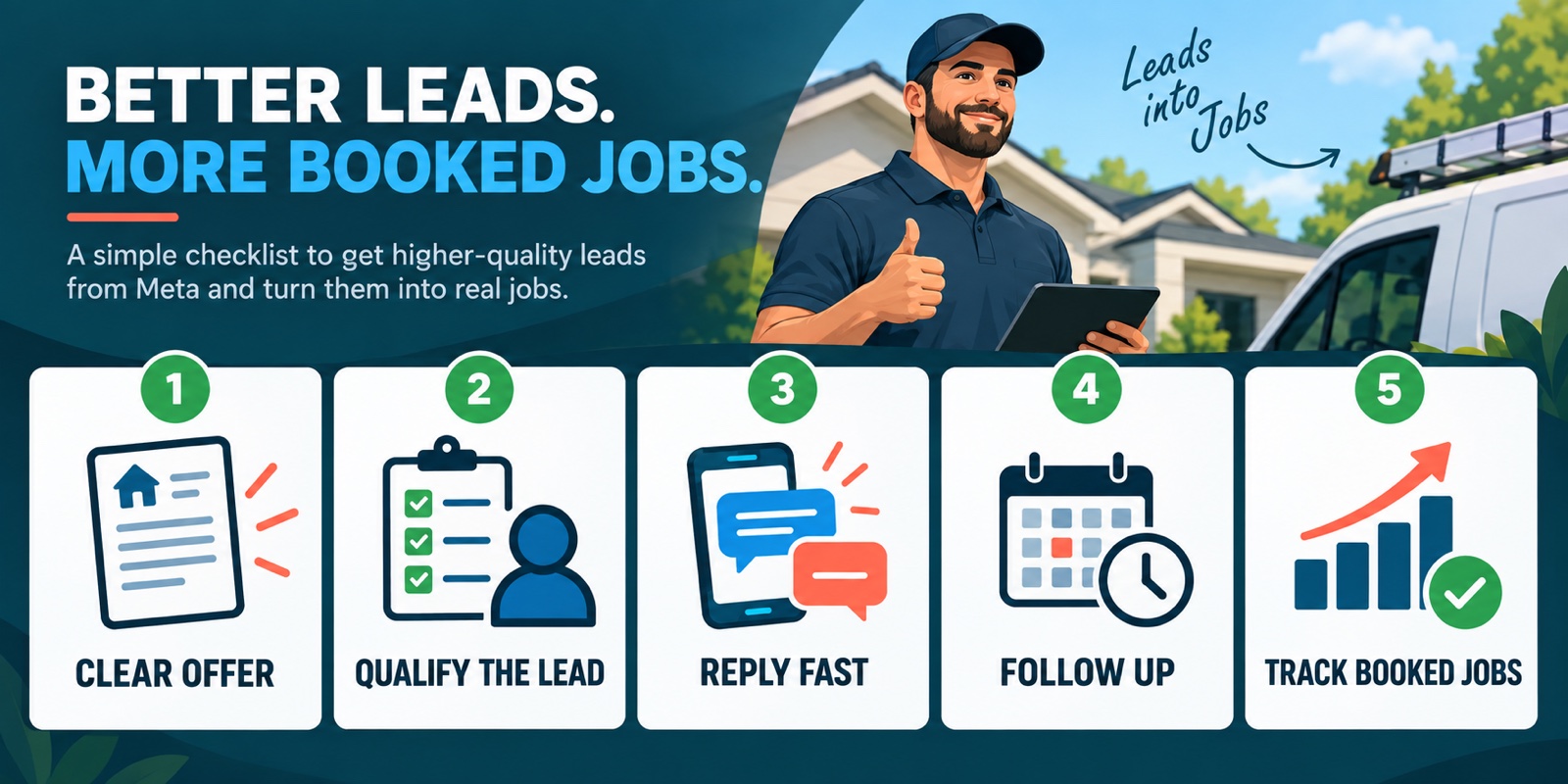
How to Get Better Results From Facebook Leads
- Promote one specific service with a clear next step.
- Use a few practical questions to qualify fit.
- Respond quickly with the source and service in your message.
- Follow up more than once without becoming aggressive.
- Track estimates and booked jobs, then feed quality outcomes back to Meta when your setup supports it.
Facebook leads are not finished customers. They are the beginning of a sales process. When the offer and follow-up system work together, the campaign has a fair chance to create real work.
FAQ
Why are my Facebook leads not converting?
Common causes include a vague offer, forms that are too easy to submit, slow response, weak follow-up, and campaigns optimized for lead volume instead of qualified or booked outcomes.
Are Facebook leads low quality?
Not automatically. Lead quality depends on the offer, creative, audience, form questions, campaign goal, and what happens after submission.
How quickly should I contact a Facebook lead?
Contact a new lead as soon as your team reasonably can while the ad and request are still fresh, then use a consistent multi-touch follow-up process.
How can contractors improve Facebook lead quality?
Use a specific service offer, add useful qualifying questions, explain the next step, follow up quickly, and track qualified leads, estimates, and booked jobs.
Free consultation
Getting leads but not enough booked jobs?
Book a free consultation and we will help you identify the first weak point to fix: the offer, lead form, follow-up, tracking, or campaign setup.
Book a Free Consultation